




4 SEASONS IN VILLACH: A CITY TO LOVE ALL YEAR ROUND
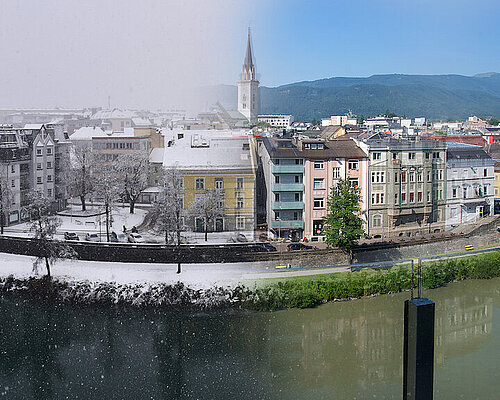
From the first blossoms of spring to warm summer days by the lake, golden autumn landscapes and snowy mountain adventures, Villach has a different side to discover in every season. With its mild climate, around 2,400 hours of sunshine per year, and a unique mix of city, nature, and mountains, every month offers new opportunities to enjoy the outdoors and experience a different facet of Villach.
SPRING: WHEN NATURE AWAKENS
Spring marks the beginning of the outdoor season in Villach. Average maximum temperatures rise from around 11.8 °C in March to 21.8 °C in May, while nature gradually returns to life. Meadows turn green, trees begin to blossom, and the mountains become increasingly inviting for outdoor adventures. With around 6.3 hours of sunshine per day on average and only a few rainy days, spring is perfect for discovering the first hiking trails or cycling through the countryside before the summer heat arrives. Explore the countryside around Villach by bike, discover the first hiking routes on lower elevations or head towards the Dobratsch to enjoy panoramic views across the region. The milder temperatures also make spring ideal for longer outdoor excursions.
For a more relaxed experience, spring is perfect for exploring Villach's historic center and enjoying the first outdoor café days. After a stroll through the old town, the Drau and surrounding green spaces, local cafés and restaurants provide plenty of opportunities to sit outside and enjoy the warmer weather.

SUMMER: LAKES, MOUNTAINS & LONG DAYS
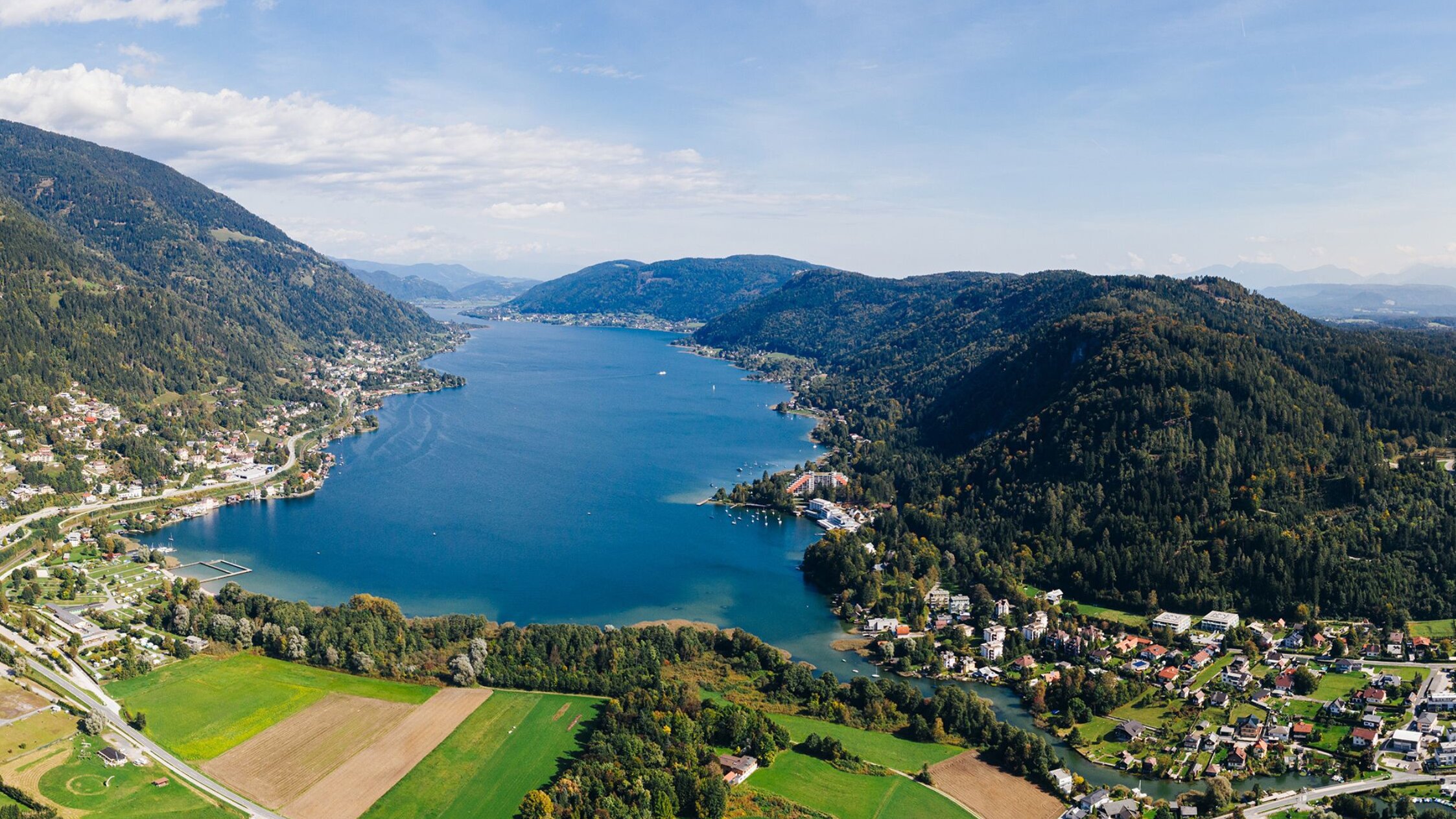
Summer is when Villach truly comes alive. With average maximum temperatures ranging from 25.1 °C in June to 27.5 °C in July and August, the region offers ideal conditions for swimming, hiking and enjoying long evenings outdoors. The surrounding lakes, including Lake Faaker See and Lake Ossiacher See, invite visitors to swim, paddle, sail or simply spend a relaxing day by the water. The mountains offer a completely different way to escape the summer heat. Early-morning hikes and mountain bike tours are particularly rewarding when temperatures are still pleasant, and the mountain air is fresh. After an active day outdoors, the lakes provide a refreshing place to cool down.
Summer weather in the Alps can also be changeable. Although July and August offer the most sunshine, summer rain and thunderstorms are part of the mountain climate. Thunderstorms can develop quickly, particularly in the afternoon and evening. Rather than seeing this as a disadvantage, it reminds you to plan mountain activities with the weather forecast in mind: start hikes early and keep an eye on changing conditions. And there is still plenty to do in the city when rain arrives: museums, cafés, restaurants, shopping and cultural events offer alternatives, while summer rain often gives way to fresh, cooler air.
When the weather is fine, summer evenings are best spent outdoors. Events, markets, music and culinary experiences bring the city center to life, while the Drau provides an atmospheric setting for highlights such as the DRAUpuls water and light show. With up to 8.1 hours of sunshine per day, summer offers the longest and brightest days of the year – and plenty of opportunities to combine lake time, mountain adventures and urban experiences in a single holiday.
AUTUMN: COLOURS, CULTURE & CULINARY EXPERIENCES
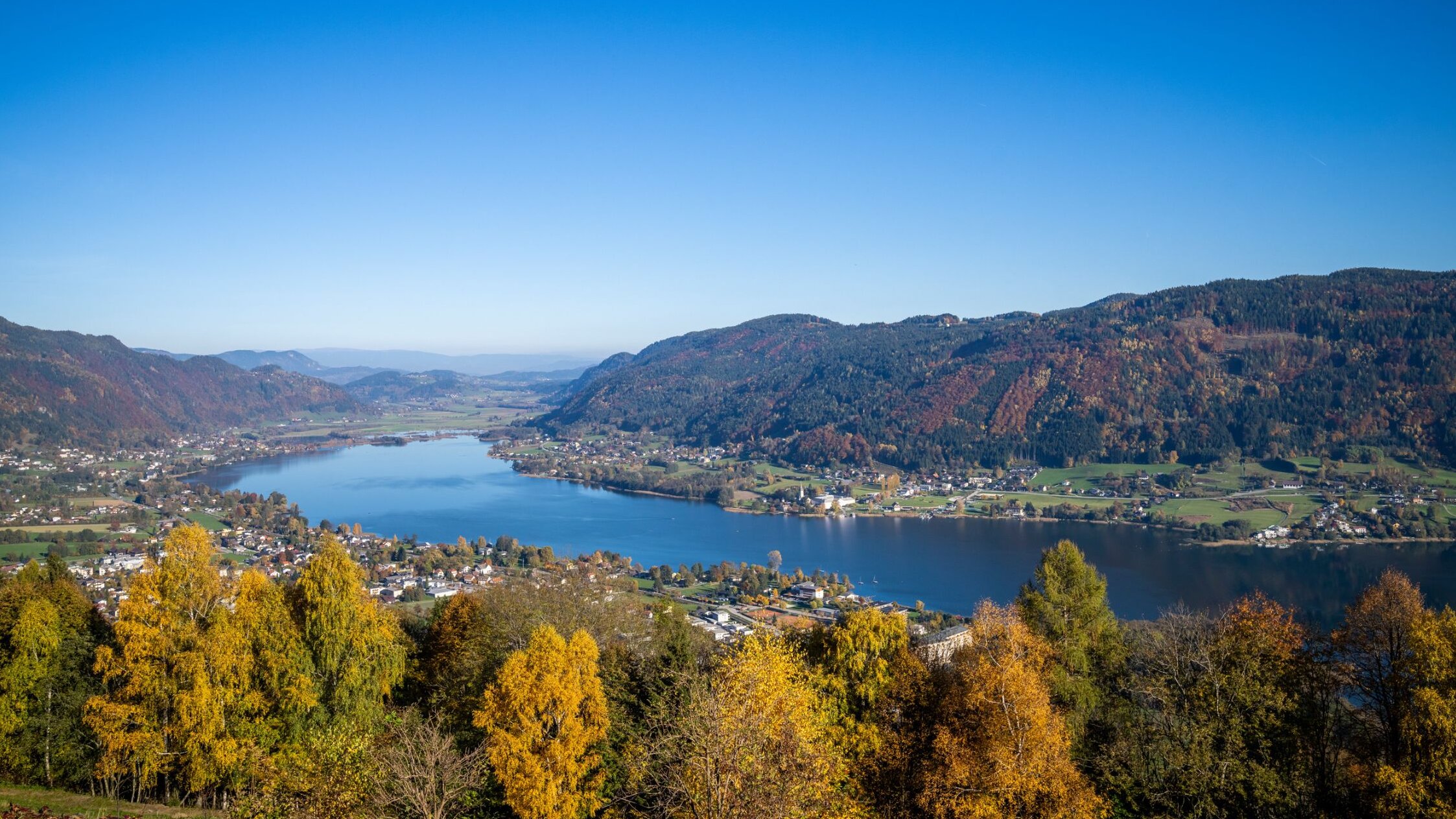
Autumn brings a completely different atmosphere to Villach. As temperatures gradually fall, the forests surrounding the city turn shades of yellow, orange and red; the air becomes crisp, and the landscape invites visitors to slow down and enjoy nature. Average maximum temperatures range from 21.5 °C in September to 8.0 °C in November, while average minimum temperatures fall from 9.4 °C to around 0.3 °C.
Early autumn, with around 4.5 hours of sunshine per day, is still perfect for hiking and cycling, while cooler temperatures make longer mountain excursions particularly enjoyable. The changing colors add an extra dimension to routes through the forests and mountains around Villach.
Autumn is also an ideal time to discover the region's culinary side. After a day outdoors, regional specialties and seasonal dishes provide a natural way to experience Carinthian traditions. Local restaurants and cozy places in and around Villach become especially inviting as the days get shorter.
For those looking for culture rather than outdoor adventure, autumn is a good time to explore Villach's museums, galleries, historic center and cultural program.
WINTER: A FAIRYTALE LANDSCAPE
Winter transforms Villach into a magical destination. Expect crisp air, snowy landscapes and a whole new range of experiences. From December to February, average maximum temperatures range from 2.5 °C to 6.4 °C, while average minimum temperatures range from -5.1 °C to -3.9 °C.
For winter sports enthusiasts, the mountains around Villach offer plenty of opportunities to enjoy the snow. Skiing, snowshoeing, and winter hiking provide different ways to experience the beauty of the winter landscape. The Dobratsch and the surrounding mountain areas provide impressive winter scenery, while nearby ski areas such as Gerlitzen Alps or Dreiländereck offer options for a full day on the slopes.
Winter is not only about snow, however. In and around Villach, the colder months are also a time for ice skating, wellness and cozy culinary experiences. After spending time outdoors, a warm meal, a relaxing spa visit at KärntenTherme or an evening in the city provides the perfect contrast to the cold mountain air. The city center takes on a particularly atmospheric character during the festive season. Christmas markets, seasonal events and beautifully decorated streets make December a special time to visit, while January and February offer a quieter winter experience.
With around 3.3 hours of sunshine per day and an average of 6.8 days with precipitation per month, winter is the quietest season in Villach – but certainly not a boring one. Its appeal lies in the contrast between snowy alpine adventures and the city's comfort.
![[Translate to Englisch:] Winterlandschaft am Ossiacher See](/fileadmin/_processed_/6/7/csm_ossiacher-see-winter-c-rvt-michael-stabentheiner_d54d2d104c.jpg "[Translate to Englisch:] Winter in der Region Villach")
CLIMATE FACTS AT A GLANCE
Villach’s climate combines four distinct seasons with many sunny days year-round. The seasonal averages show the variety of spring, summer, autumn, and winter:
Season | Average daily maximum | Average daily minimum | Sunshine | Percipitation days | Best experiences |
Spring | -1.0 to 8.1 °C | 11.8 to 21.8 °C | 6.3 h/day | 9.5 day/month | Hiking, cycling, nature walks, exploring the city |
Summer | 11.8 to 13.7 °C | 25.1 to 27.5 °C | 8.1 h/day | 12.2 day/month | Swimming, SUP, hiking, cycling, outdoor events |
Autumn | 0.3 to 9.4 °C | 8.0 to 21.5 °C | 4.5 h/day | 9.4 day/monat | Autumn hikes, cycling, mountain views, culture & cuisine |
Winter | -5.1 to -3.9 °C | 2.5 to 6.4 °C | 3.3 h/day | 6.8 day/monat | Skiing, winter hiking, snowshoeing, ice skating, spa |
*Climate data: GeoSphere Austria, climate reference period 1991–2020 (as shown in the graphic).
Whether it is a summer day at the lake, a colorful autumn hike, a spring bike ride or a snowy winter adventure, Villach offers the perfect setting for every season. What makes the city particularly appealing is that these experiences are never far apart: the Drau and historic center are right in the city, the mountains are on the doorstep, and the lakes are just a short bike or car ride away. Here, changing seasons are not a limitation but an invitation: Four times a year, a new side of Villach is waiting to be discovered.