




ART & CULTURE ON THE RAIL – A FULMINANT START OF WESTBAHN INTO THE SOUTH
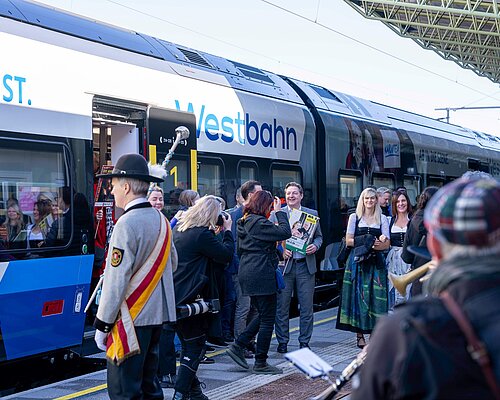
On 27th March, Westbahn inaugurated its new route between Vienna and Villach with an unforgettable maiden journey. The launch of the private rail operator’s southern connection placed culture at the center: the high-speed train, capable of up to 250 km/h, as well as the stations in Klagenfurt and Villach were transformed into vibrant stages for music, dance, literature, and visual art.
The cultural journey concluded at Villach Central Station, Carinthia’s main railway hub “Kärnten Hauptbahnhof”, where guests were warmly welcomed. Together with the tourism region of Villach and the industry and tourism initiative welcome2villach, the City of Villach greeted travelers with regional culinary specialties and musical entertainment. The occasion also served to present Villach as a city of culture, an attractive destination, and a promising place to live and work.
A JOURNEY BY TRAIN IN THE SPIRIT OF CULTURE
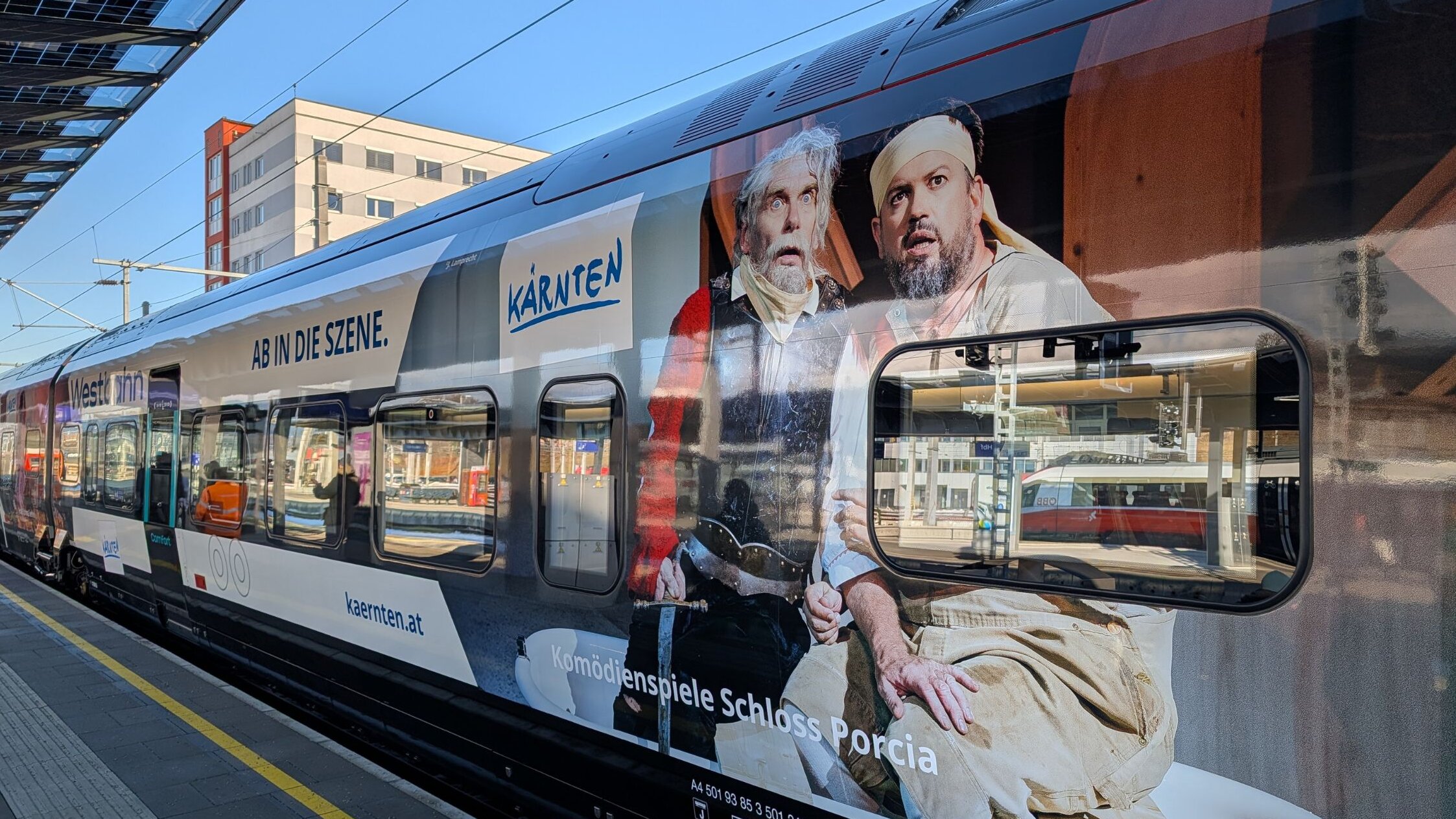
Under the motto “Art & Culture on the Rails in Carinthia Koroška,” one of the three new SMILE high-speed trains from Stadler was ceremonially inaugurated during the premiere trip. The cultural concept was already visible on the train’s exterior: all three sets, which have been in service on the Vienna–Villach route since 1st March, feature distinctive artistic liveries.
These designs showcase important cultural institutions and initiatives in Carinthia, including the Landesmuseum Kärnten, the Artist’s Town of Gmünd, the Ingeborg Bachmann House, the Carinthian Summer, the Ensemble Porcia, the Museum of Modern Art Carinthia (MMKK), the Lassnig Atelier, the cultural town of Bleiburg/Pliberk, the Heunburg Theatre, and the Liaunig Museum.
Inside the train, the three-and-a-half-hour journey became a mobile cultural festival.
CULTURAL ENJOYMENT ON THE RAIL
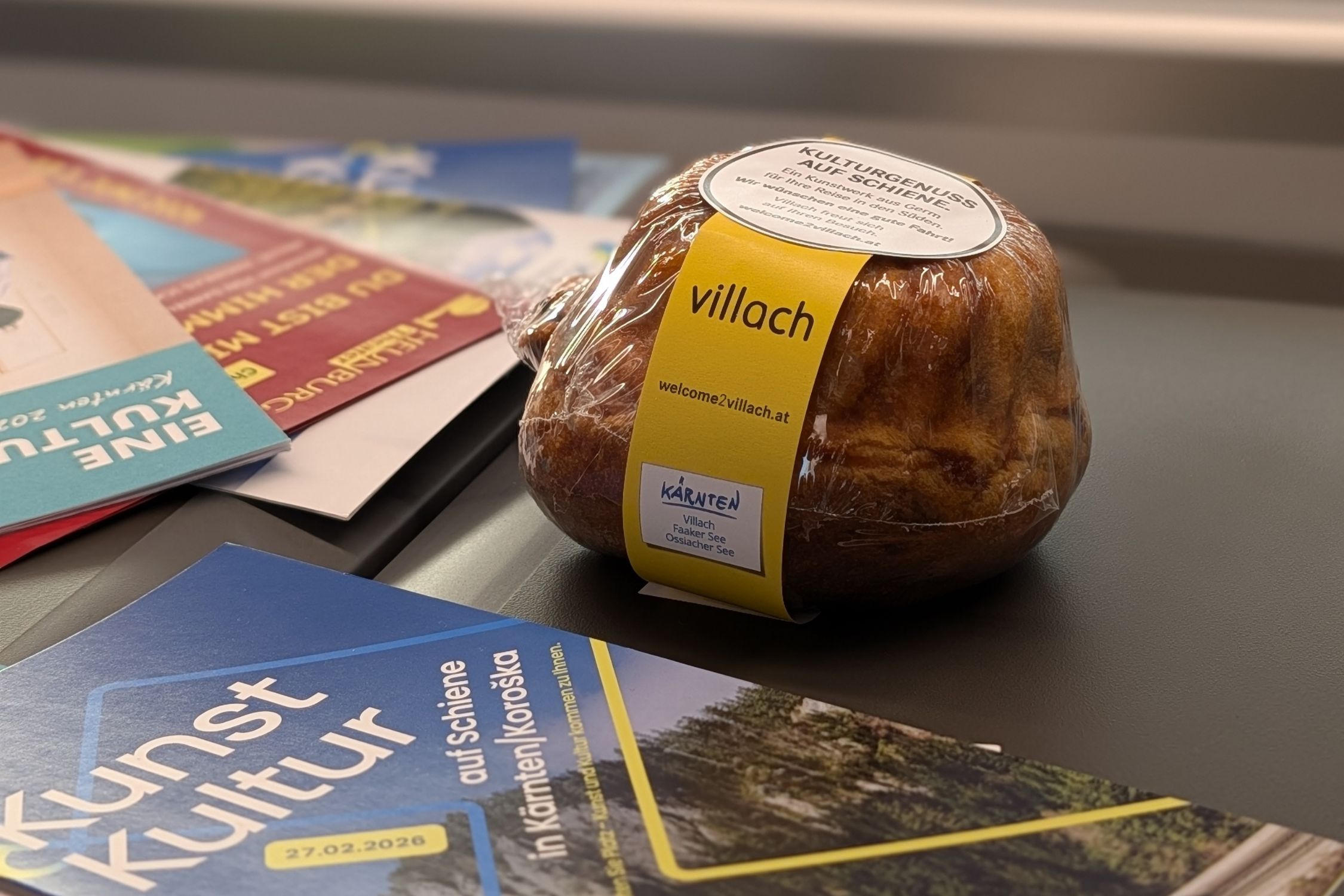
Passengers were welcomed at their seats with a sweet breakfast greeting from Carinthia: a total of 1,000 mini Reindlinge from Bäckerei Berger provided a delightful start to the day. Guests also received reading material with information about the program and Carinthia’s diverse cultural scene.
The artistic curation of the program was developed by Carinthia Summer festival director Nadja Kayali together with Florian Eisner (Ensemble Porcia), Andreas Ickelsheimer (Heunburg Theatre) und Arthur Ottowitz (Werner Berg Museum) Bleiburg/Pliberk.
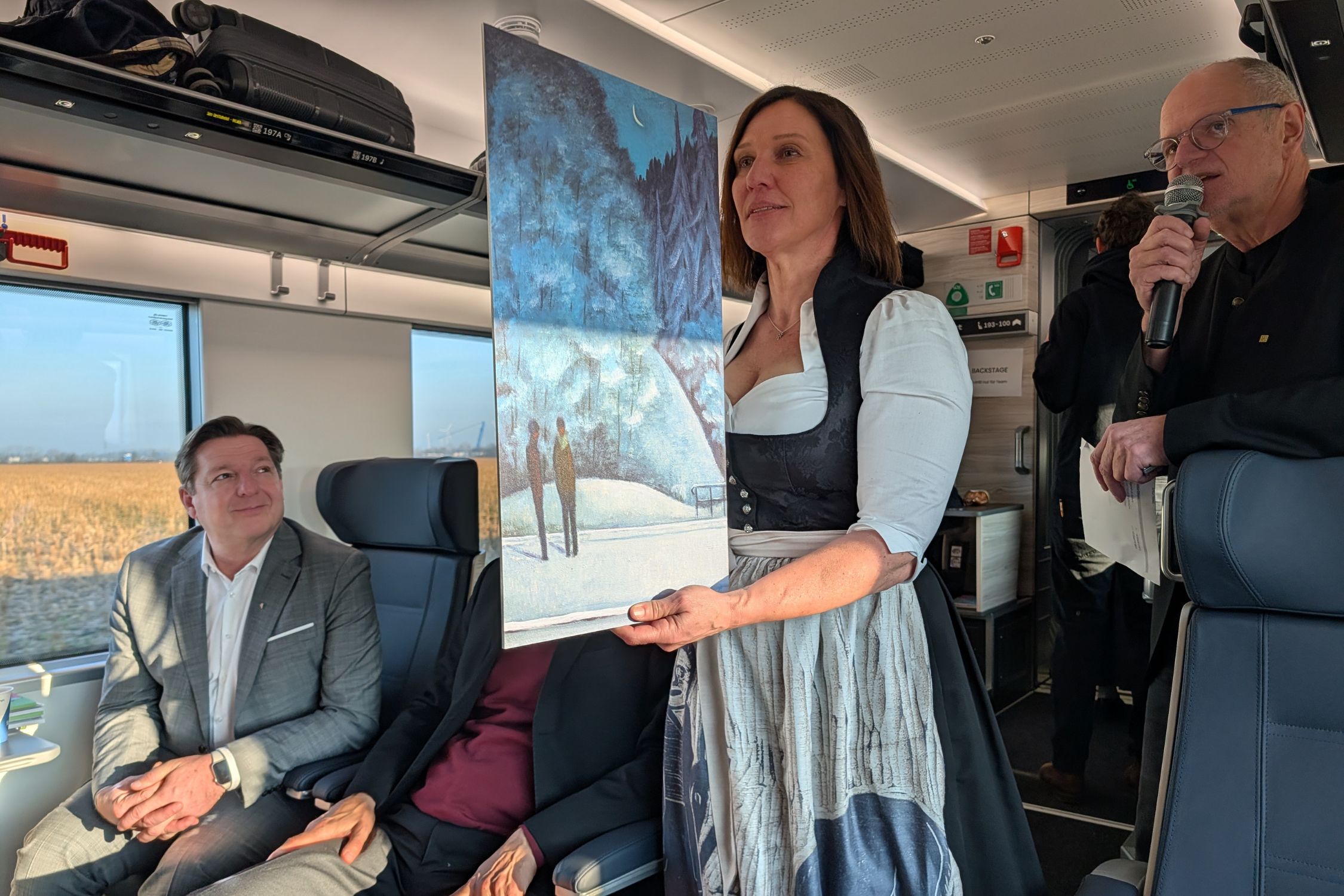
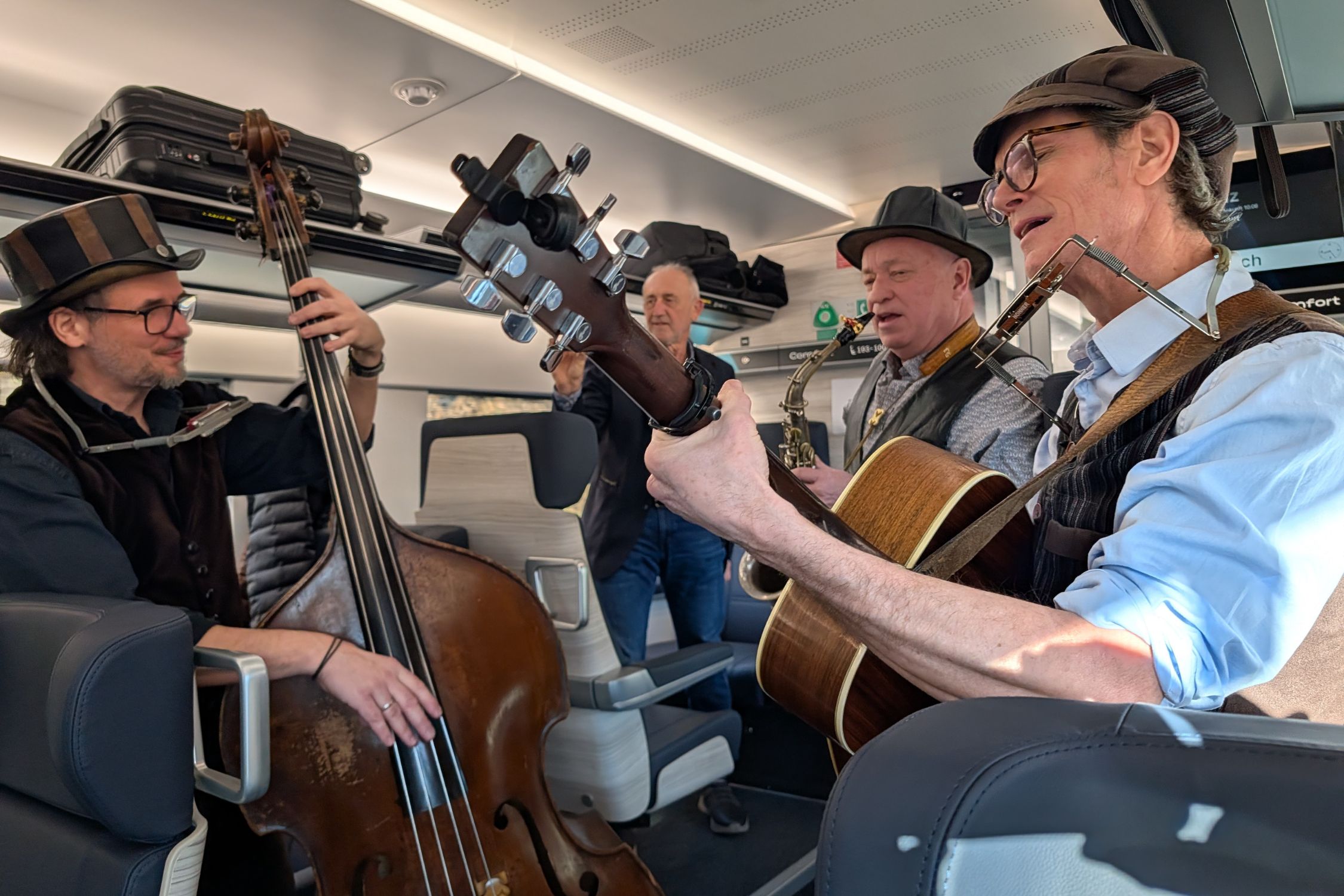
Throughout the journey, guests remained comfortably in their seats as a variety of cultural performances were brought directly to them by participating artists from Carinthia. A walking gallery by the Werner Berg Museum and Heunburg Theatre displayed artworks from Werner Berg Museum and presented staged readings from the biodrama “Christine Lavant & Werner Berg: Du bist mir jetzt schon der Himmel und die Erde.“ Musical performances by Company of Music, Duo Sonoma, the Hillibilli Trio, the Quintett Petzen, and musicians Salah Ammo and Peter Gabis provided rich musical variety. Comedy performances by Ensemble Porcia, literary readings by Lojze Wieser and Barbara Maier, a dance performance by WoMen Art, and a live painting session by Johann Julian Taupe completed the program and turned the train journey itself into a cultural experience.
DISTINGUISHED GUESTS
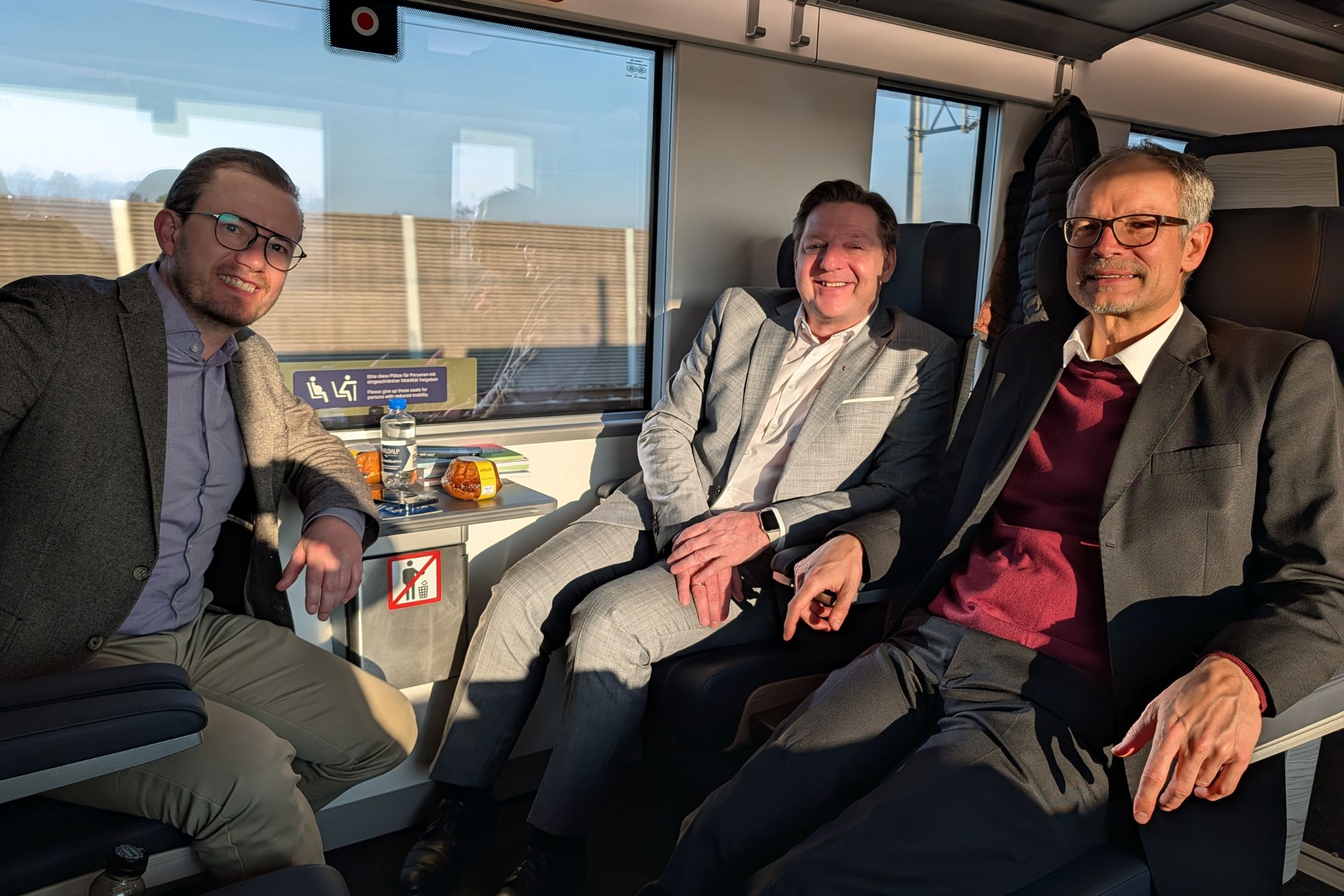
Among the guests on the maiden journey were numerous personalities from politics, business, tourism, media, and culture. In addition to Westbahn owner Hans Peter Haselsteiner and managing directors Marco Ramsbacher and Thomas Posch, attendees included mobility minister Sebastian Schuschnig, governor Peter Kaiser, his designated successor Daniel Fellner, and deputy governor Gaby Schaunig. Also on board were parliament member Olga Voglauer, former foreign minister Ursula Plassnik, and former High Representative for Bosnia and Herzegovina Valentin Inzko.
Villach’s mayor Günther Albel and city marketing head Pierre Bechler had traveled to Vienna the evening before to participate in the historic journey.
From tourism and hospitality, representatives included Werzers proprietor Hans-Werner Frömmel and hotel director Roland Hirtenfelder. The tourism regions were represented by Georg Overs (Villach region) and Robert Karlhofer, alongside Kärnten Werbung managing director Klaus Ehrenbrandtner.
Numerous media representatives accompanied the journey, including Karin Bernhard (ORF regional director), Peter Fässlacher (ORF III cultural programming chief), former television presenter Claudia Reiterer, and former correspondent Eugen Freund. Also among the guests was Christina Traar, editor-in-chief of Kleine Zeitung Vienna.
Other notable personalities included former Raiffeisen general counsel Christian Konrad, former ORF director and SK Rapid Wien president Alexander Wrabetz, and Klagenfurt cathedral pastor Peter Allmaier.
From the cultural sector, attendees included artistic director of the Klagenfurt City Theatre Aron Stiehl and federal theaters chief Christian Kircher.
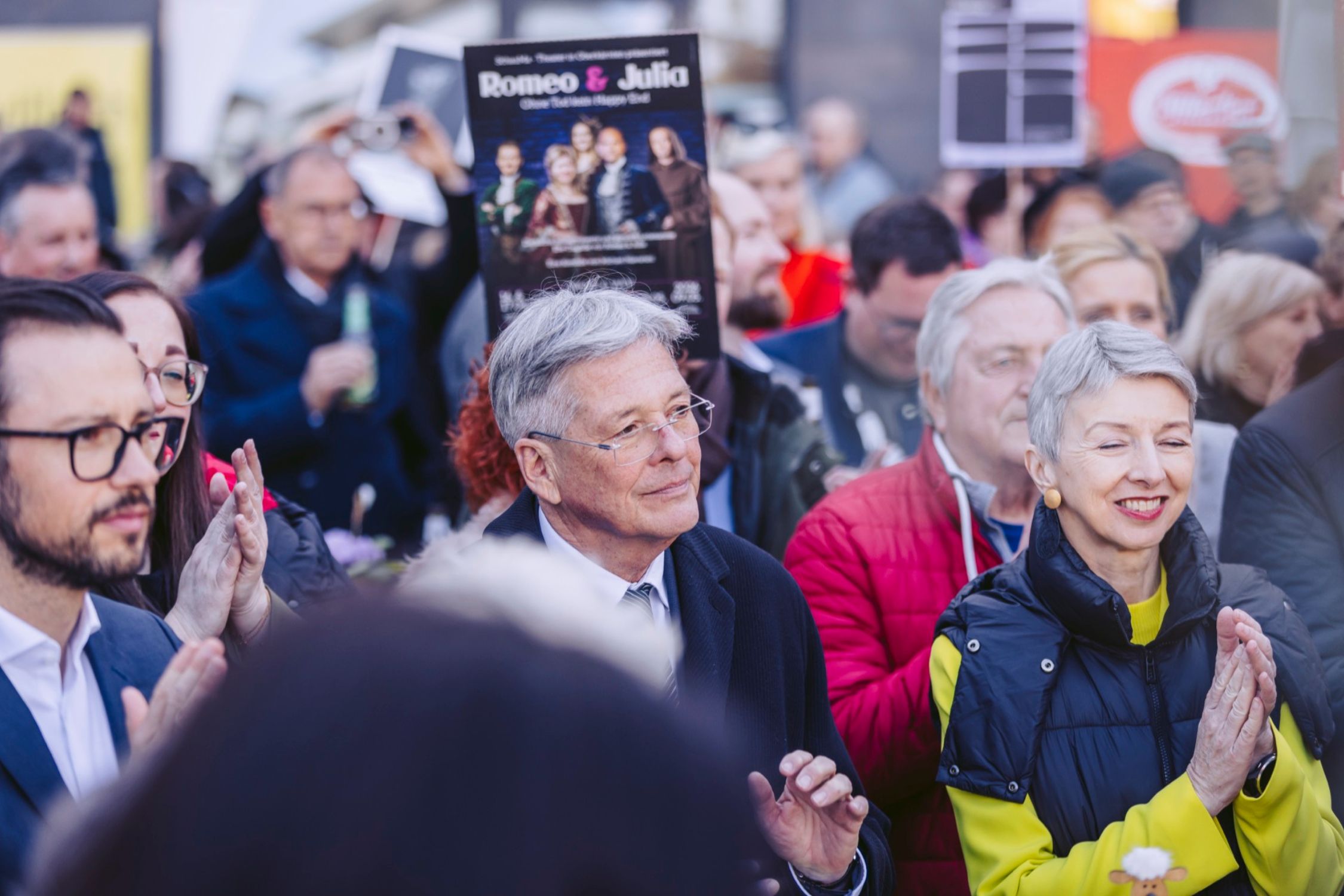
THE DESTINATION: CARINTHIA CENTRAL STATION
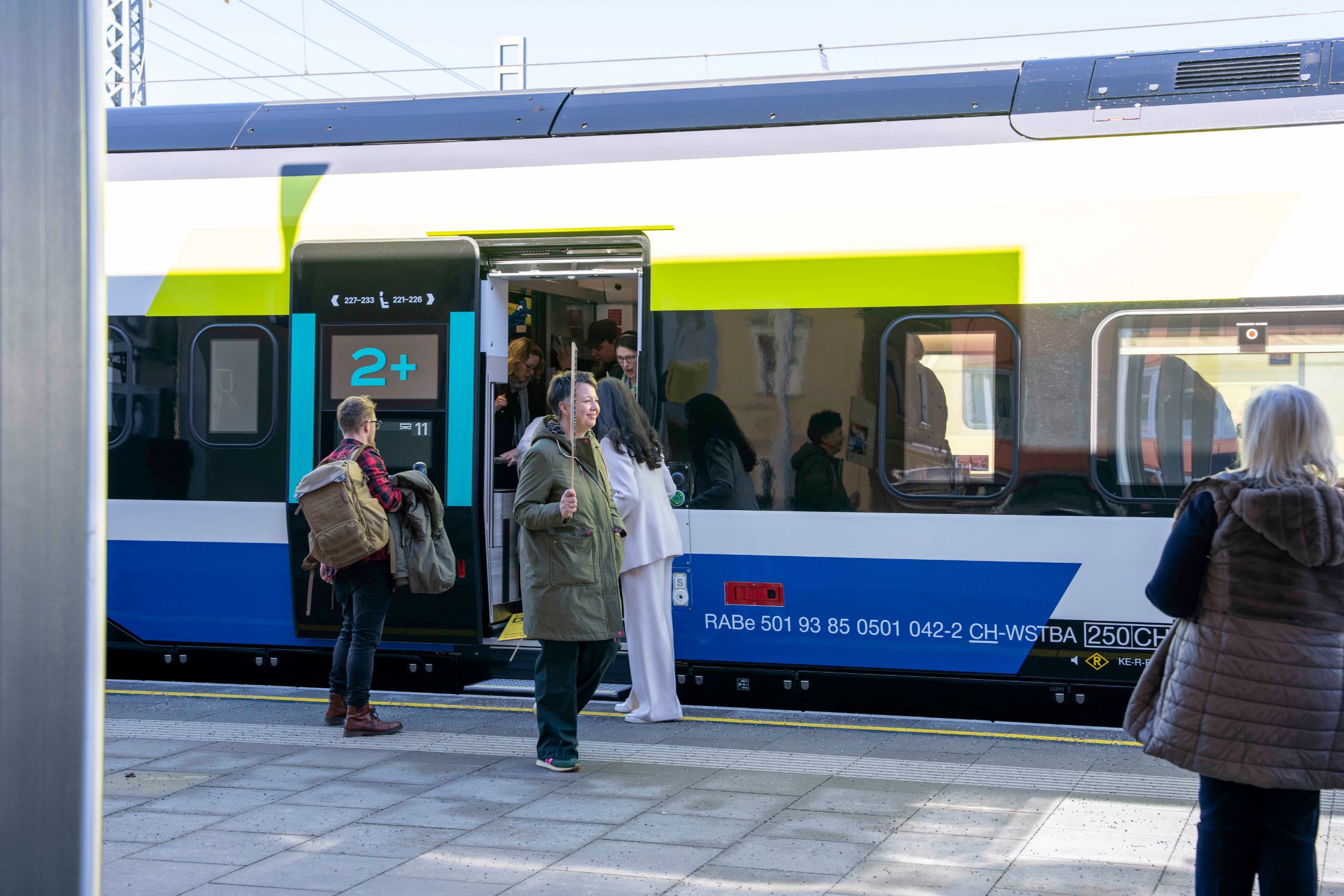
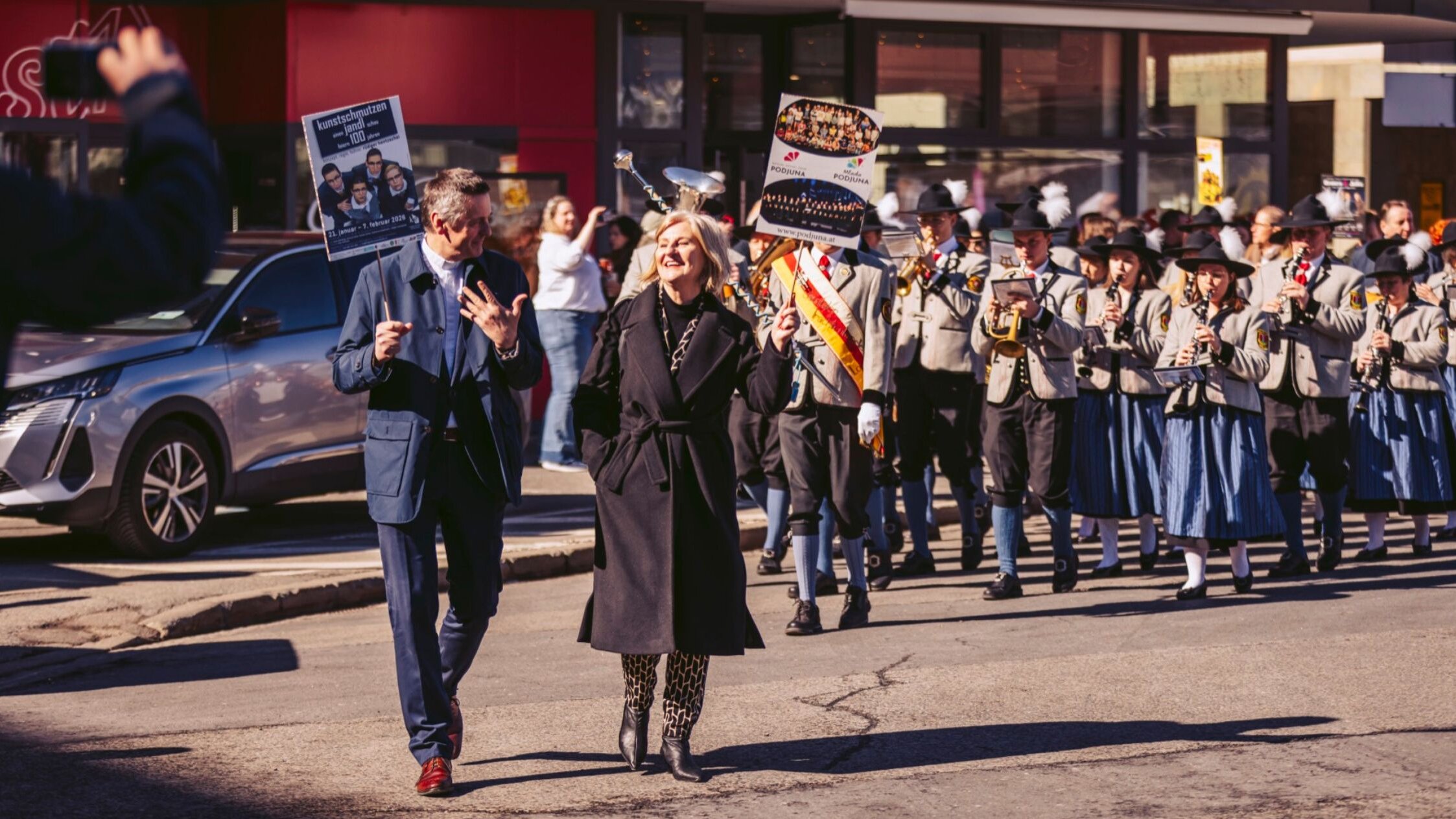
The premiere journey reached its climax at Villach Central Station. Guests were greeted by the Jauntaler Trachtenkapelle. Together with the musicians, they proceeded in a procession of posters showcasing Carinthian cultural events toward the station square, where the Stadtkapelle des Eisenbahnmusikvereins awaited.
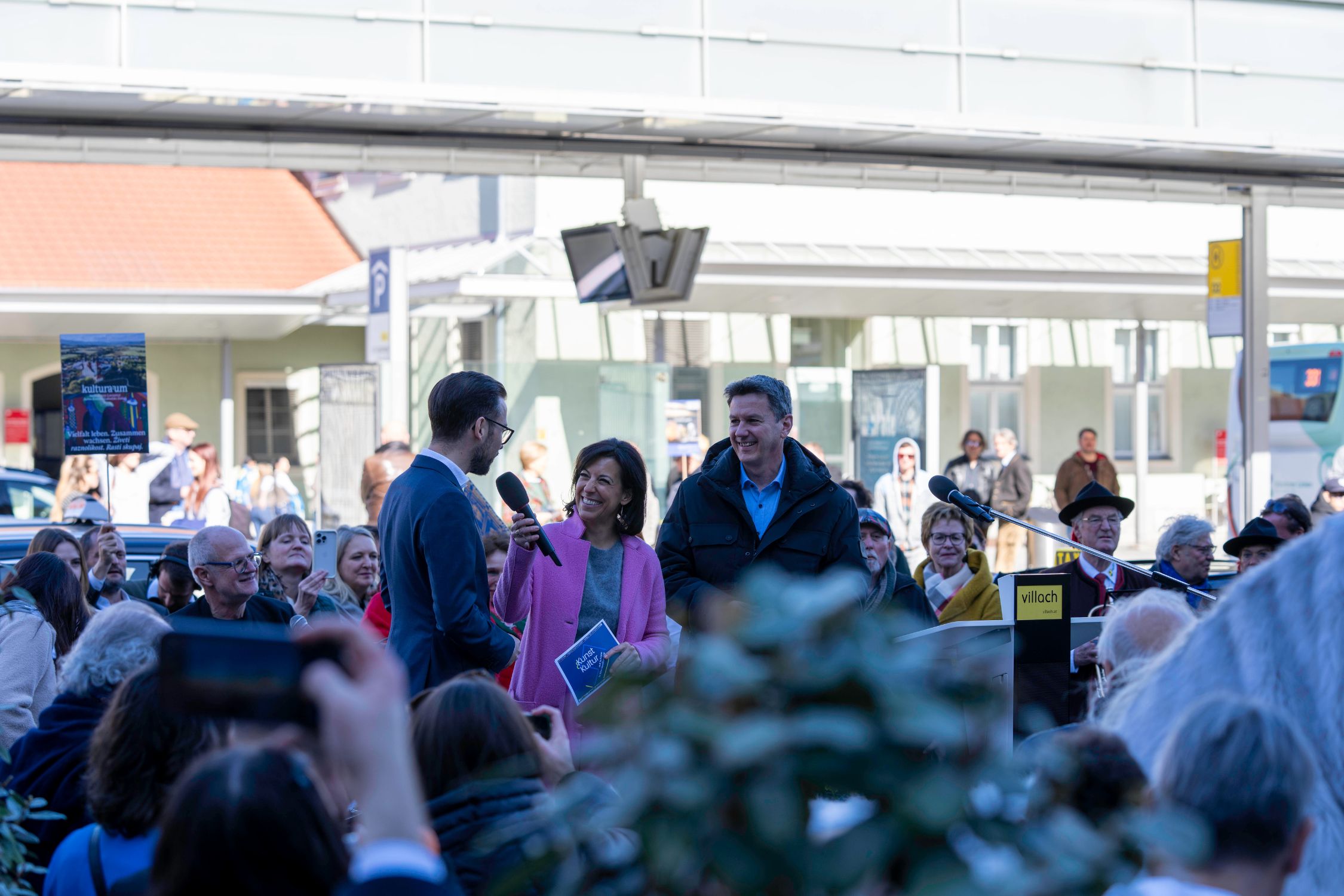
Under the moderation of Ute Pichler, mayor Günther Albel delivered the first welcome address. Ministers Daniel Fellner and Sebastian Schuschnig, as well as governor Peter Kaiser, subsequently addressed the audience. The ceremony was musically accompanied by zither and harmonica performances from musicians Silvia Igerc & Arthur Ottowitz.
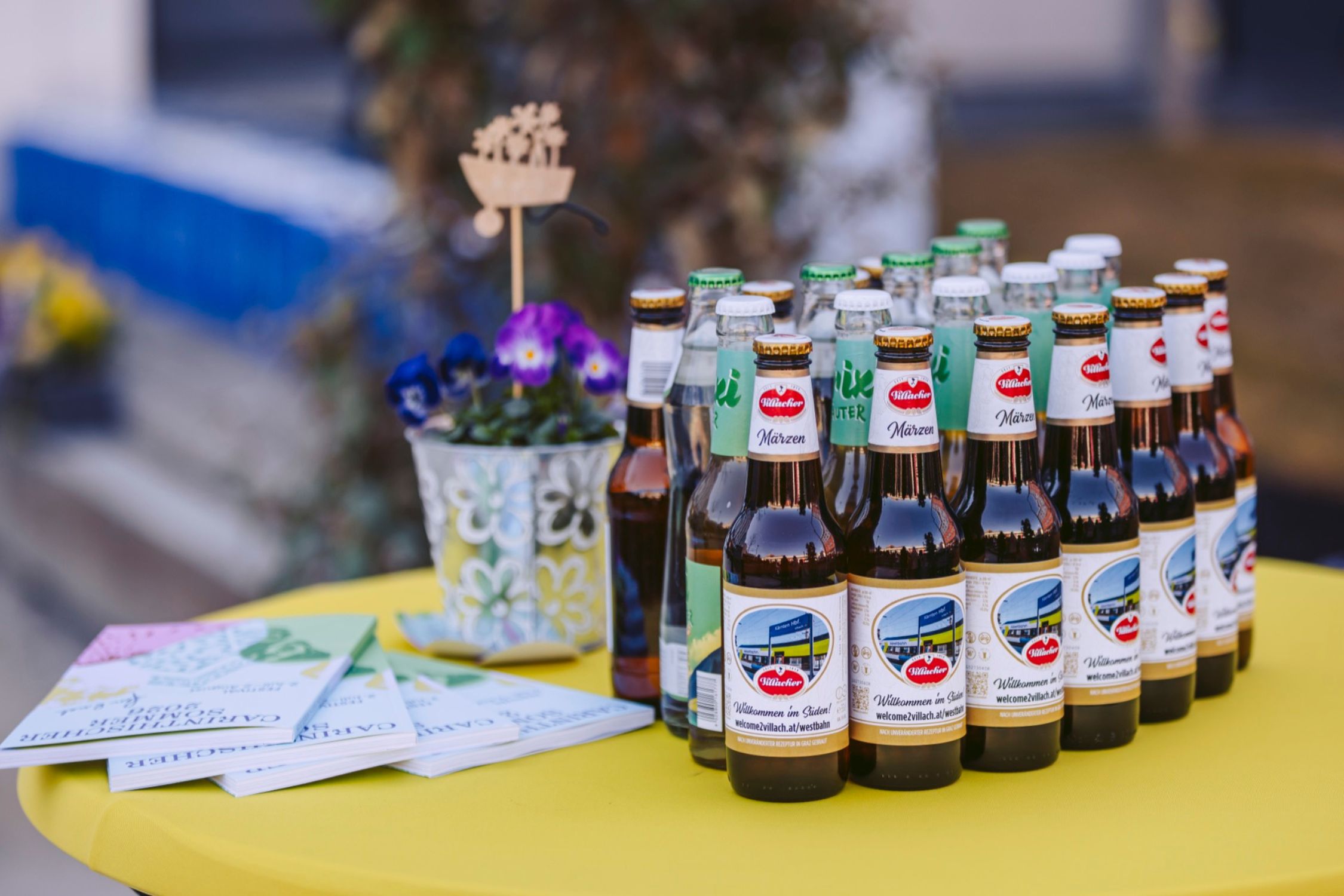
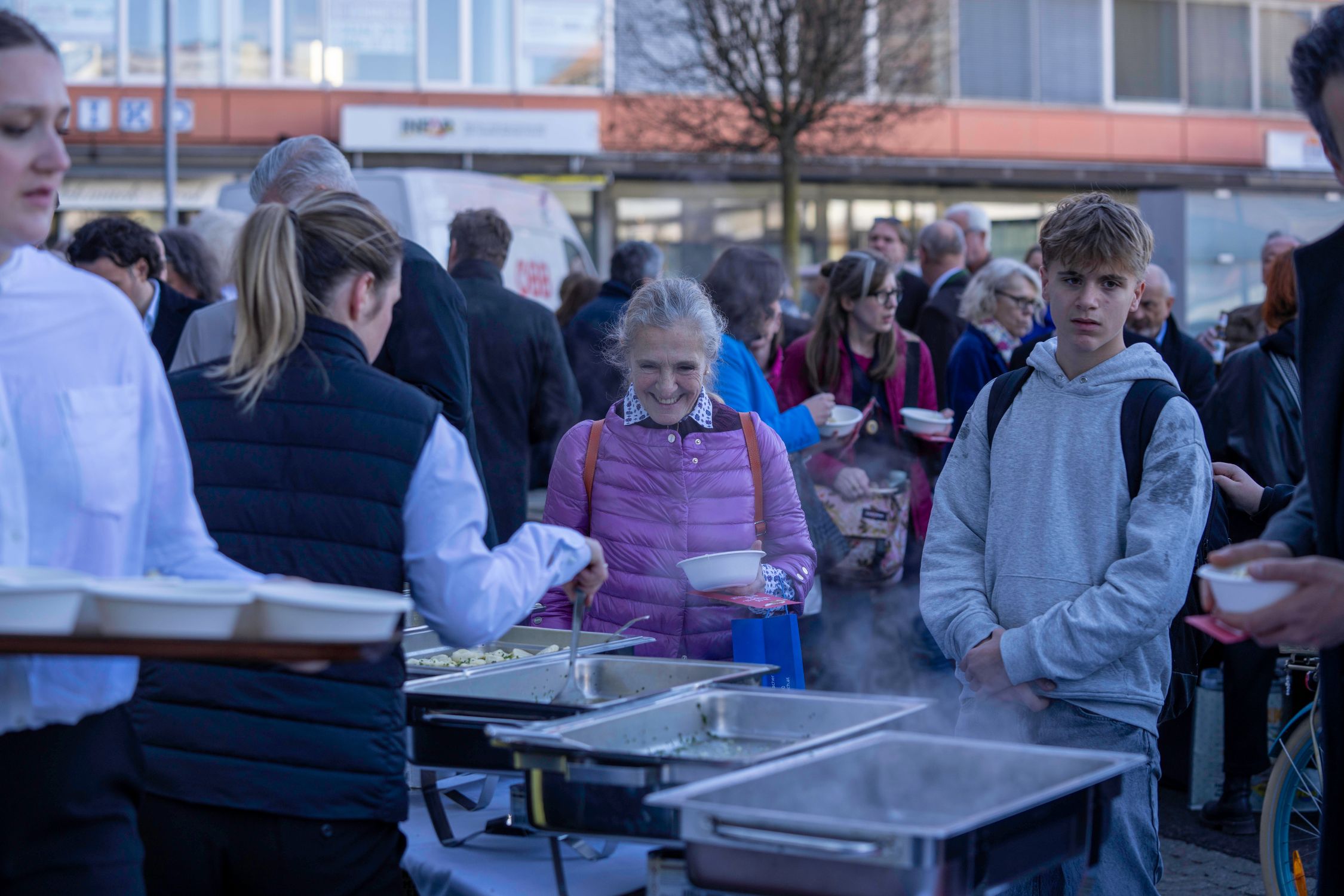
Afterward, guests had about an hour to enjoy Carinthian Kasnudeln from the Villacher Brauhof and a specially branded beer created for the occasion. Well refreshed and equipped with a welcome package and information about Villach, they departed back toward Vienna around 1 p.m.
With this extraordinary cultural journey, Westbahn not only marked the successful launch of its new connection between Vienna and Villach but also demonstrated how modern mobility, culture, and regional identity can be interconnected. For Villach, the direct connection represents another important step in strengthening its visibility as a city of culture, business location, and attractive destination in southern Austria.